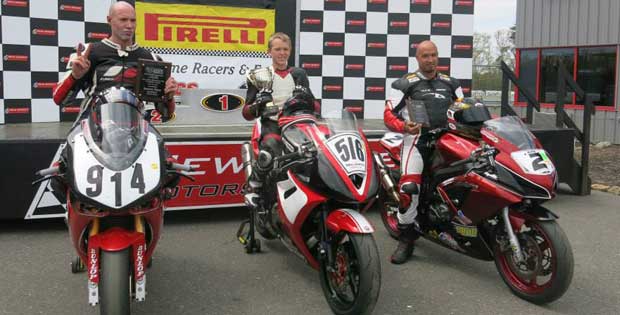
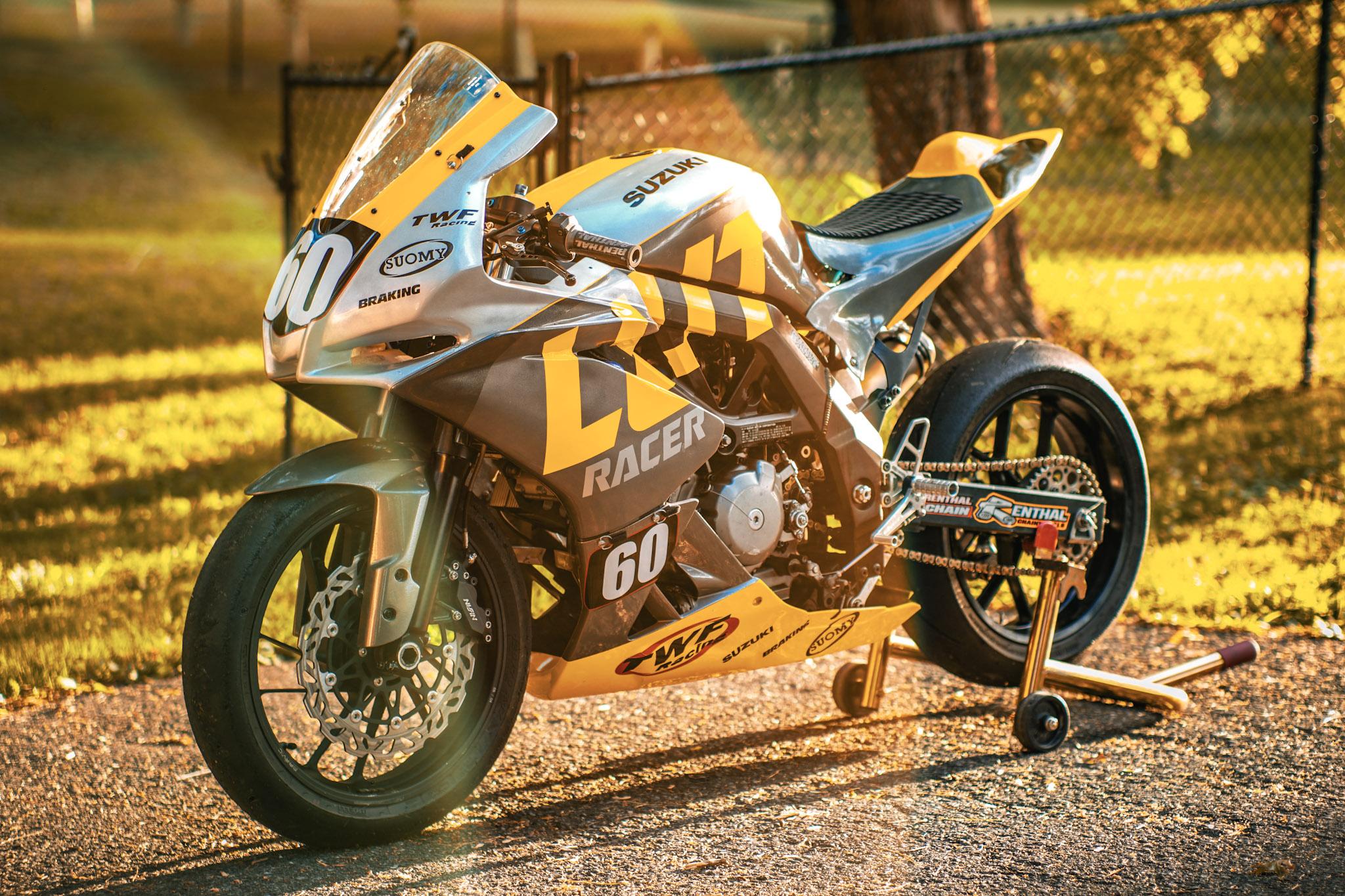
The 7 year SV500 project is complete.
This post has already been read 1801 times!
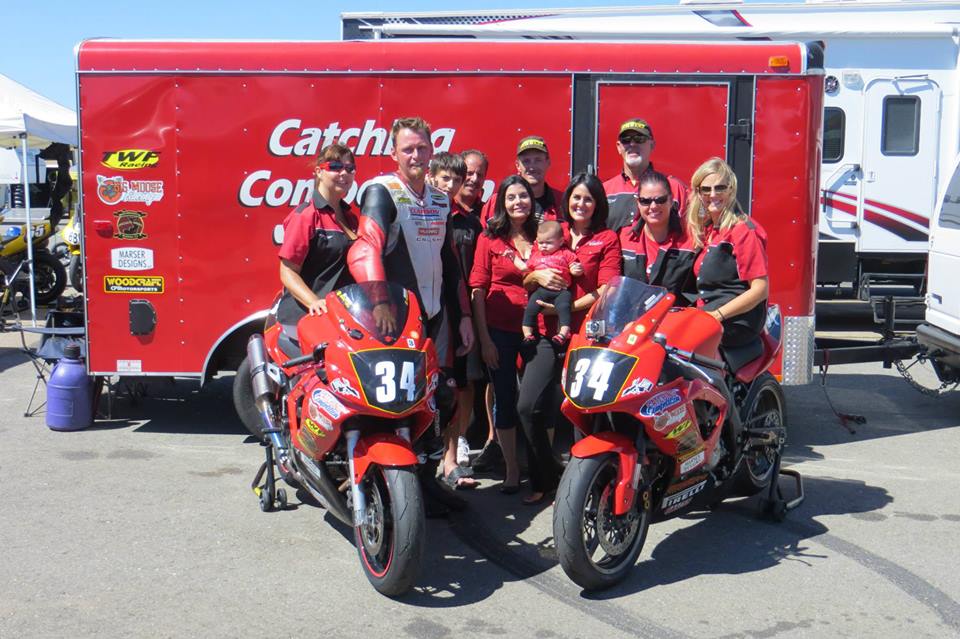
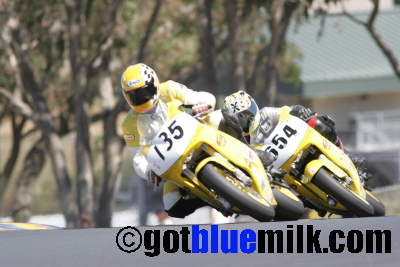
Before the SV650 was introduced, Suzuki released the SV400 in Japan in 1998. The SV400 never transitioned into the second generation of the SV lineup and was discontinued in 2004, still using the first-generation chassis. In late 2003, Jon Forman brought two of the gray market 400’s to California and took them right from the shipping container to Zoran at the Twin Works Factory shop in Reno to prep them for the upcoming 2004 season. Jon and teammate Joe Sickle campaigned the 400’s in AFM’s 500 Twins and 250 Superbike classes, with Jon winning the Twins championship. In race trim with full bodywork, gsxr front end and wider rear wheels. the bikes looked just like a full size SV650, every race they had someone in the pits screaming at them for “cheating” with a 650, followed by an embarrassing exit when they realized their 500 twin or 250 TZR was bested by a stock engined 400.
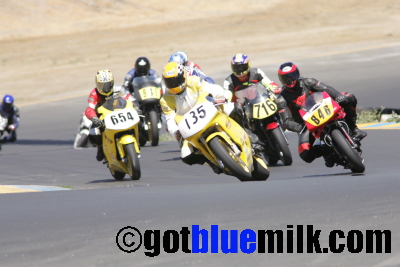
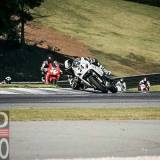
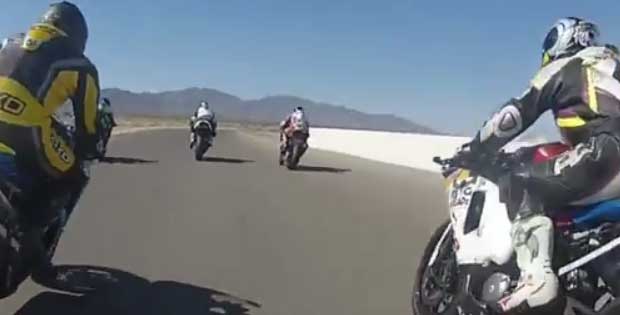
Shots of a couple original TWF SV400’s on track piloted by Joe Sickle and Jon Forman
For the 2005 season, Zoran sharpened the knife. With custom connecting rods, Twin Works Factory was able to mate the SV650’s 81 mm pistons to the SV400 crankshaft, increasing displacement to 500 cc. The team went on to claim two more AFM 500 Twins championships, take podium finishes and top three year end standings in AFM’s 450 Superbike class, and win multiple endurance races with these SV400/500 hybrids. By 2007, Zoran was receiving requests to build SV500’s for other racers (this time taking an SV650 and converting it to a 500).
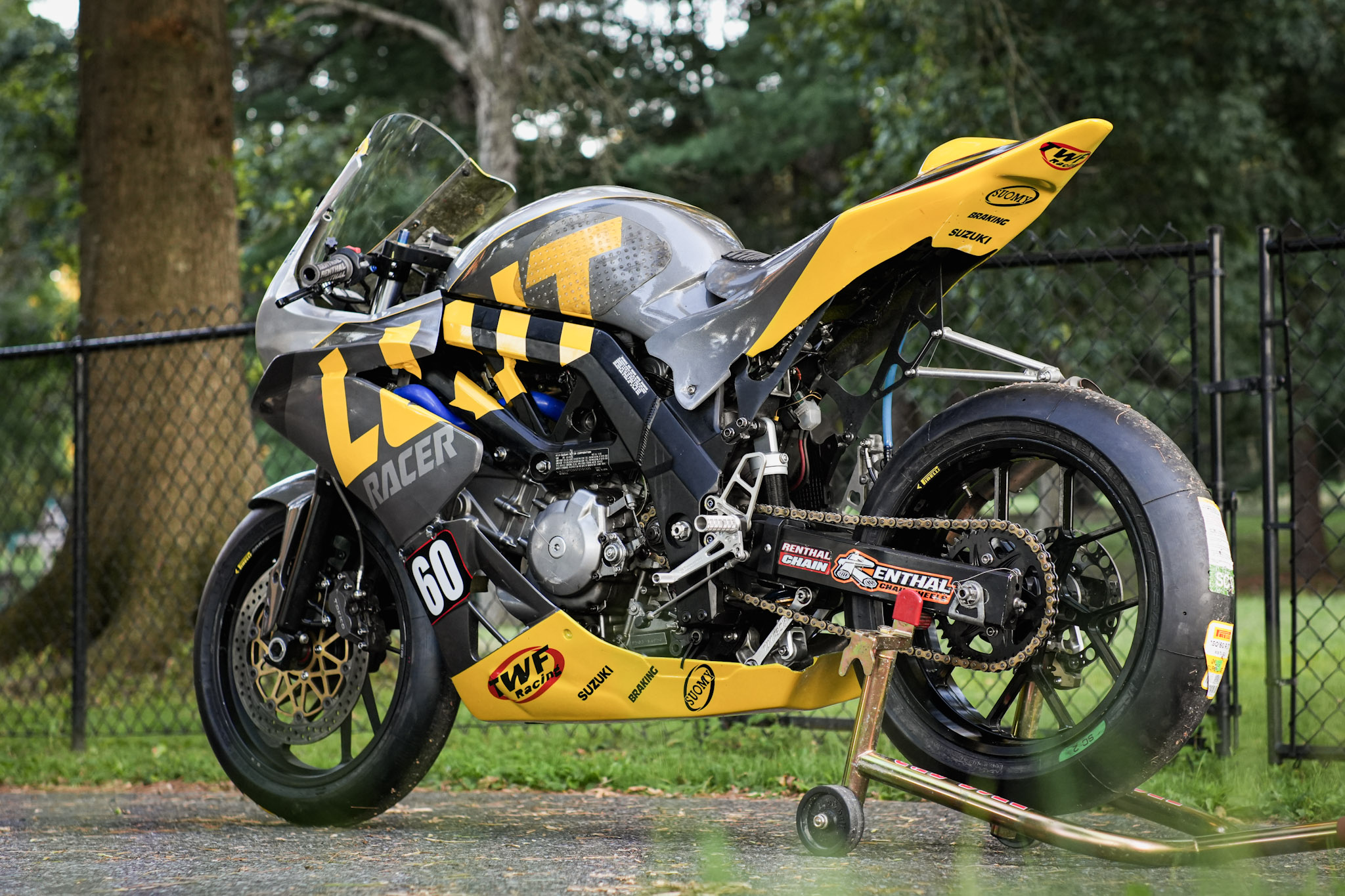
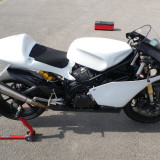
At the time, I had a second-generation SV650 superbike with a stock bore, weighing roughly 310 lbs and producing about 90 hp. I wasn’t planning on tearing it apart to build this project—it looked just like the bike you see here, only with a different LWT scheme. But thanks to MotoAmerica Twins Cup, that bike was dismantled for its parts, leaving me with some prime components for the SV500 build: an ultralightweight ETI Fuelcel, a paper-thin aluminum subframe, RSV4 fairings, and a Carrozzeria 5-inch rear rim.
So how did this all lead to the machine we see here? In 2018, Zoran had a bike come into his shop—an old SV500 that the owner wanted converted back into an SV650. Not long after, I got an email from Z asking if I wanted some engine parts. My addiction didn’t allow me to say no.
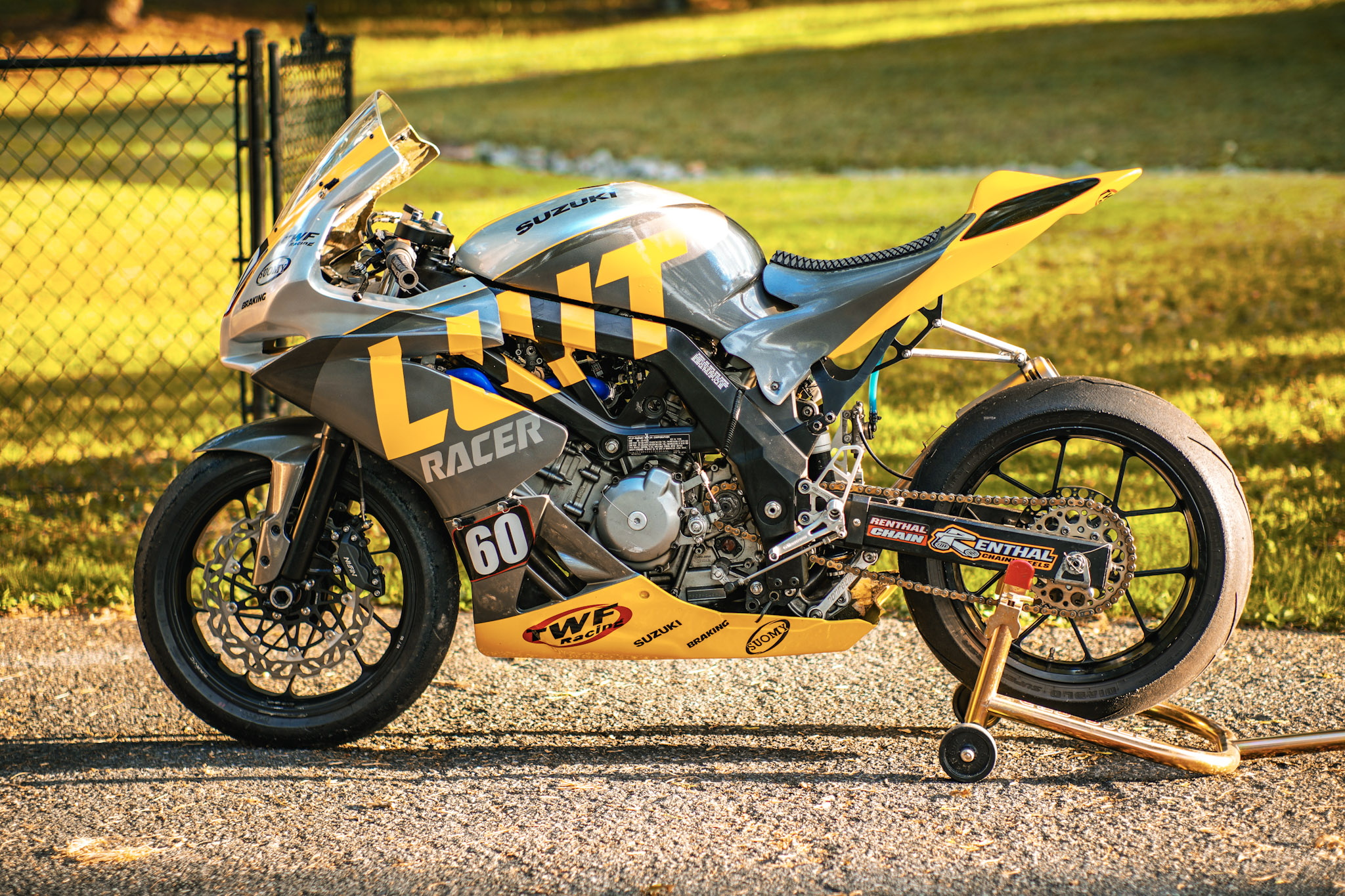
When it came time to build the motor, I had everything I needed from Zoran: a lightened SV400 crank, custom H-beam connecting rods, and a set of ported heads fitted with Yoshimura camshafts. I paired these with JE FSR 81 mm pistons from the 650 SBK engine.
My original goal for this bike shifted once I acquired those lightweight components. Suddenly, going sub-300 lbs was within reach. One easy way to shed weight was to run a single front disc—brake rotors and calipers aren’t light, and this alone dropped about five pounds. The rear shock came from Hyperpro, chosen specifically because it lacks a reservoir and compression adjustment, keeping weight down. Instead of the standard 15-tooth front sprocket, I ran a 14-tooth paired with a 39- or 40-tooth rear.
By 2020, when the bike was nearly complete for the first time, it tipped the scales at just 284 lbs with fluids (and only half a gallon of fuel). Since then, a few changes have added a couple of pounds—the titanium shock spring was moved to another bike, and the aluminum rear brake rotor was replaced with the stainless version you see in these photos.
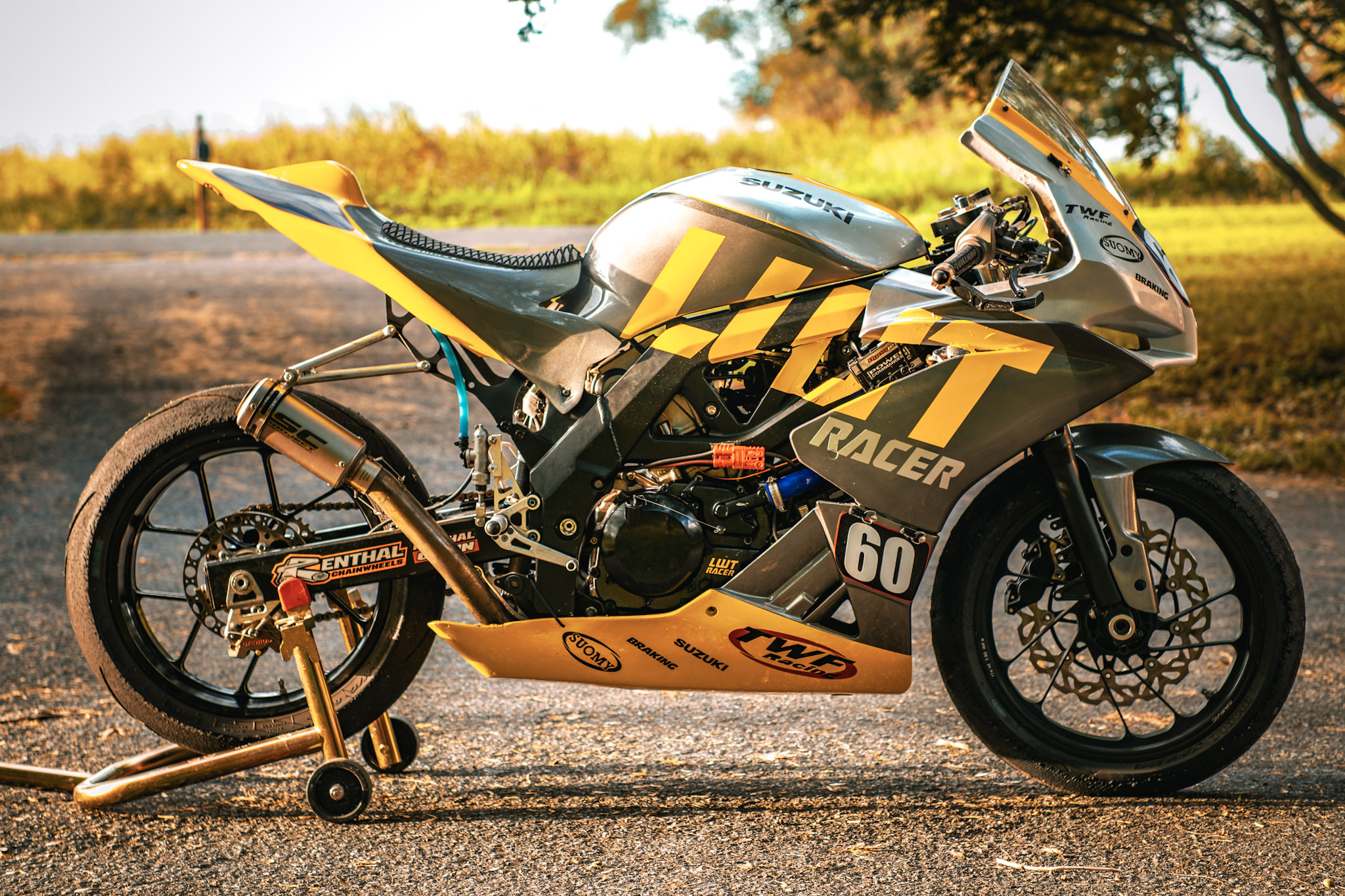
Under the fuel tank sits a set of TWF Racing–bored throttle bodies paired with Robem Engineering velocity stacks, all managed by a Power Commander for tuning. At the moment, the bike runs on AVGAS LL100—a clean, inexpensive option that works well with the high-compression engine. It’s also far easier on the fuel system compared to VP or other specialized racing fuels.
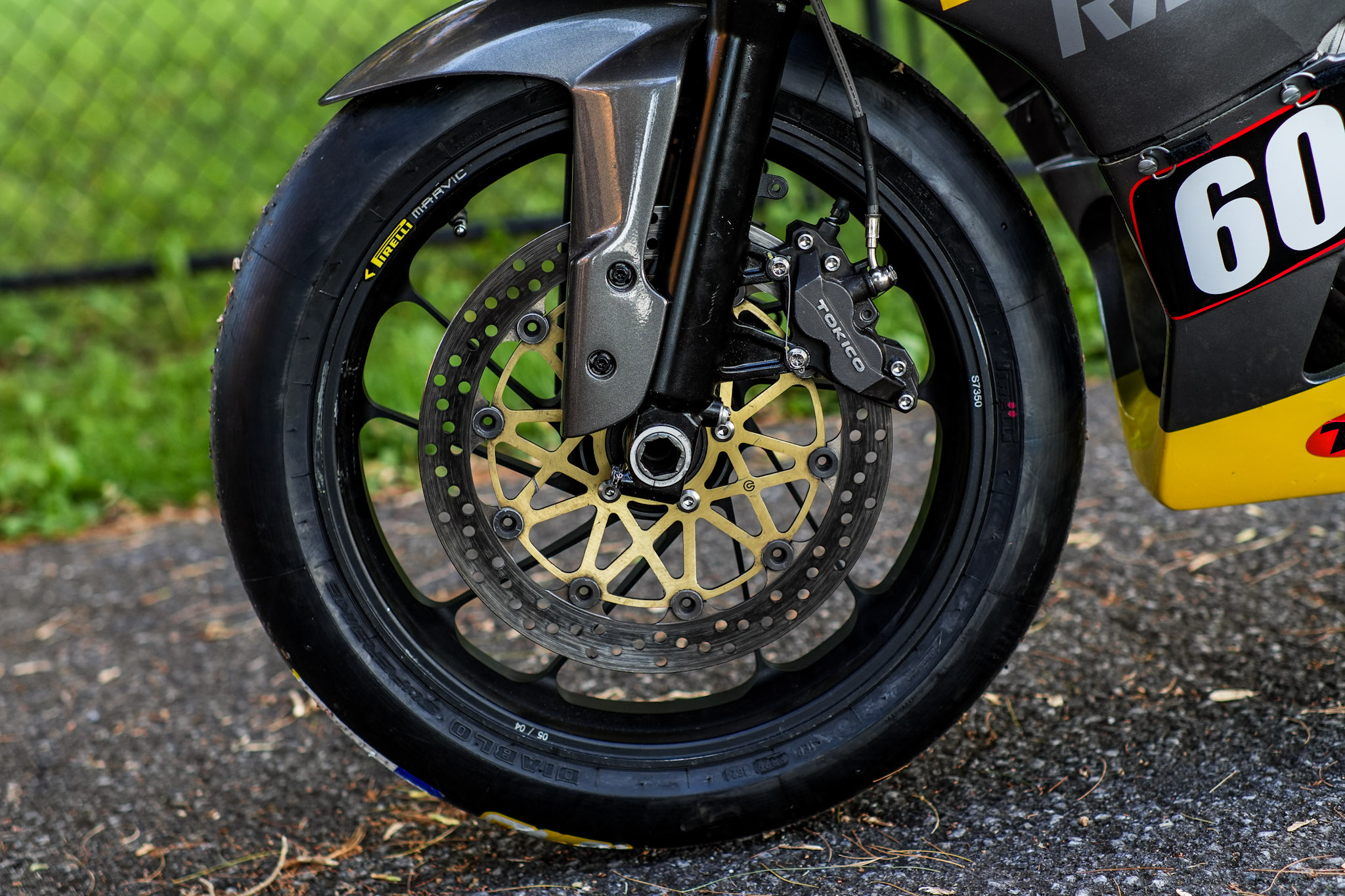
In some photos you’ll notice a Driven brake rotor paired with a Nissin caliper up front. Those have since been swapped for a Brembo HPK 320 mm rotor and a Tokico caliper from a GSX-R600. The change wasn’t entirely planned—I had ordered new brake pads, only to realize when they arrived that I’d mistakenly bought pads for an ’03 GSX-R600 instead of the ’04 CBR600 Nissin caliper. Fortunately, an old four-pot Tokico caliper was lying around, making the swap possible.
But why change the rotor? When I put the front wheel on the balance stand, I discovered the original rotor was slightly out of round. In the end, it turned out to be a win—the Brembo rotor not only performs as it should but also looks much better. The big question now is whether a single rotor and caliper will be enough. Given the bike’s exceptionally low weight and its performance being a step below a full-power SV, I’m confident it will be.
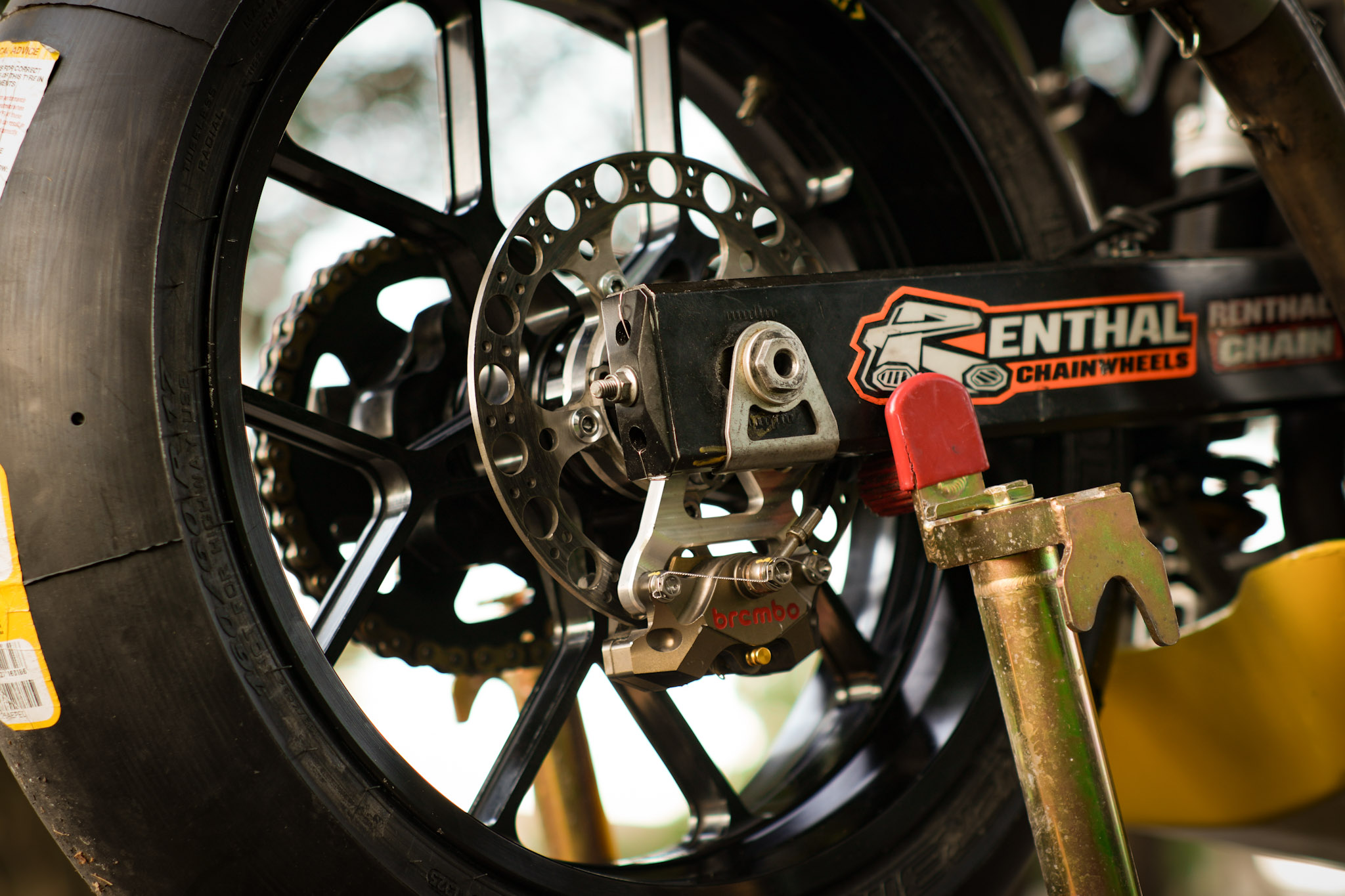
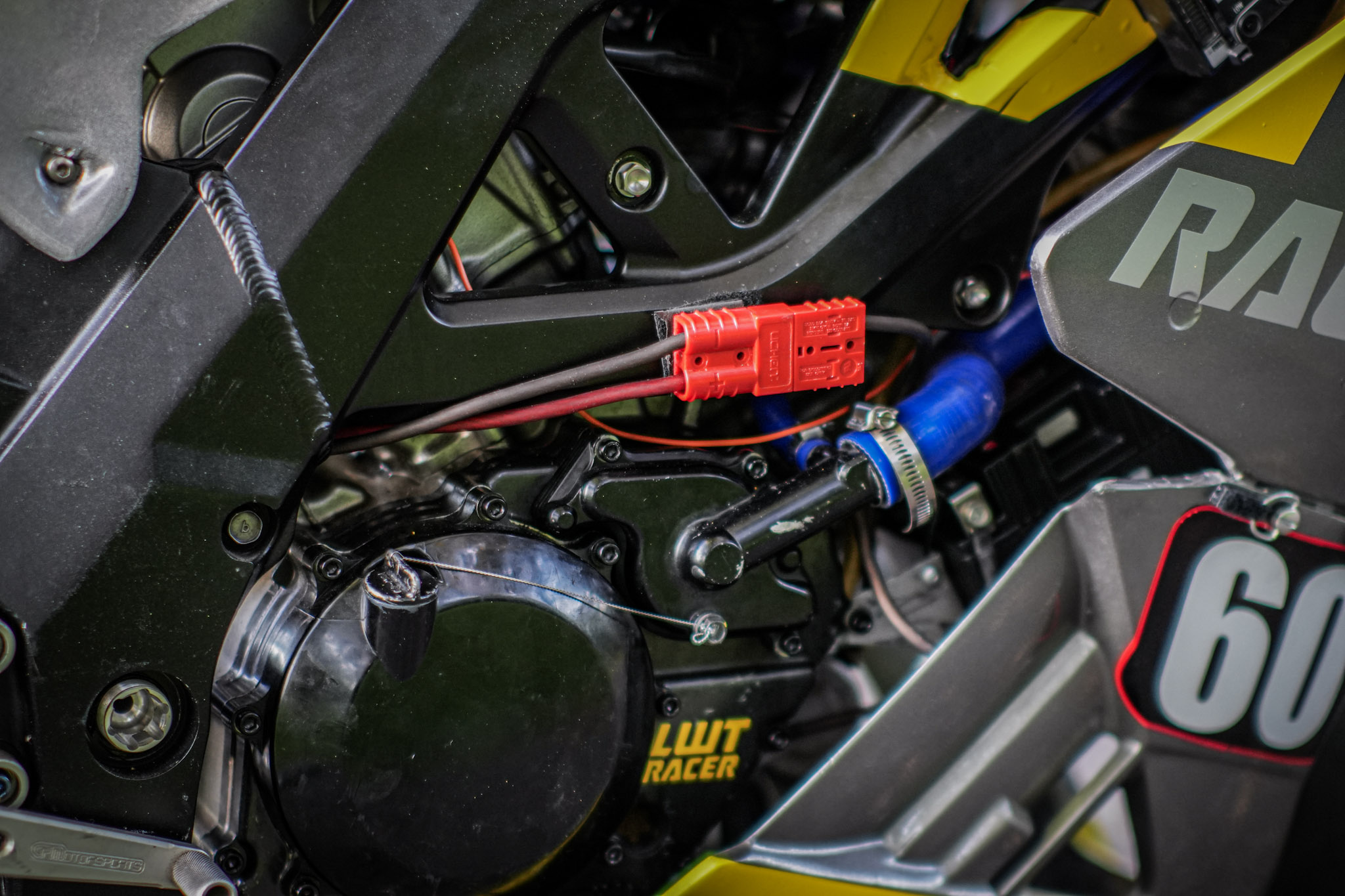
The SV500 runs a total loss electrical system, which means the battery isn’t recharged while the bike is running. This setup reduces rotating mass inside the engine and also sheds a bit of weight by eliminating the stator and rectifier. The trade-off, however, is the need for a larger-capacity battery if you plan to run 30-minute races. For this build, I went with a Shorai LFX19—the big brother to the LFX14 we’d typically use on an SV650. The weight difference between the two is minimal, but the added capacity makes the longer runs possible.
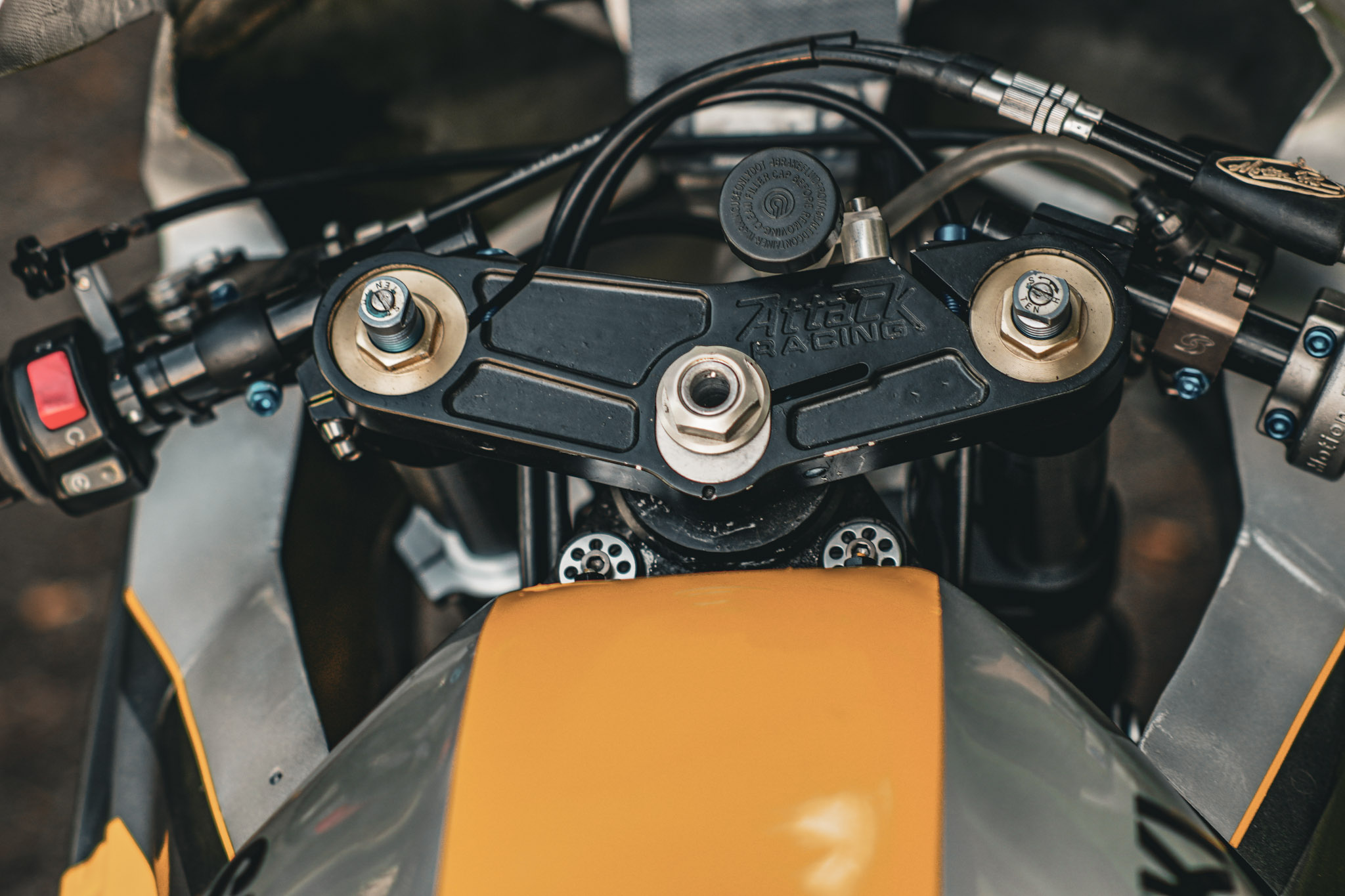
The CBR and GSXR both share 45mm fork tube diameter.
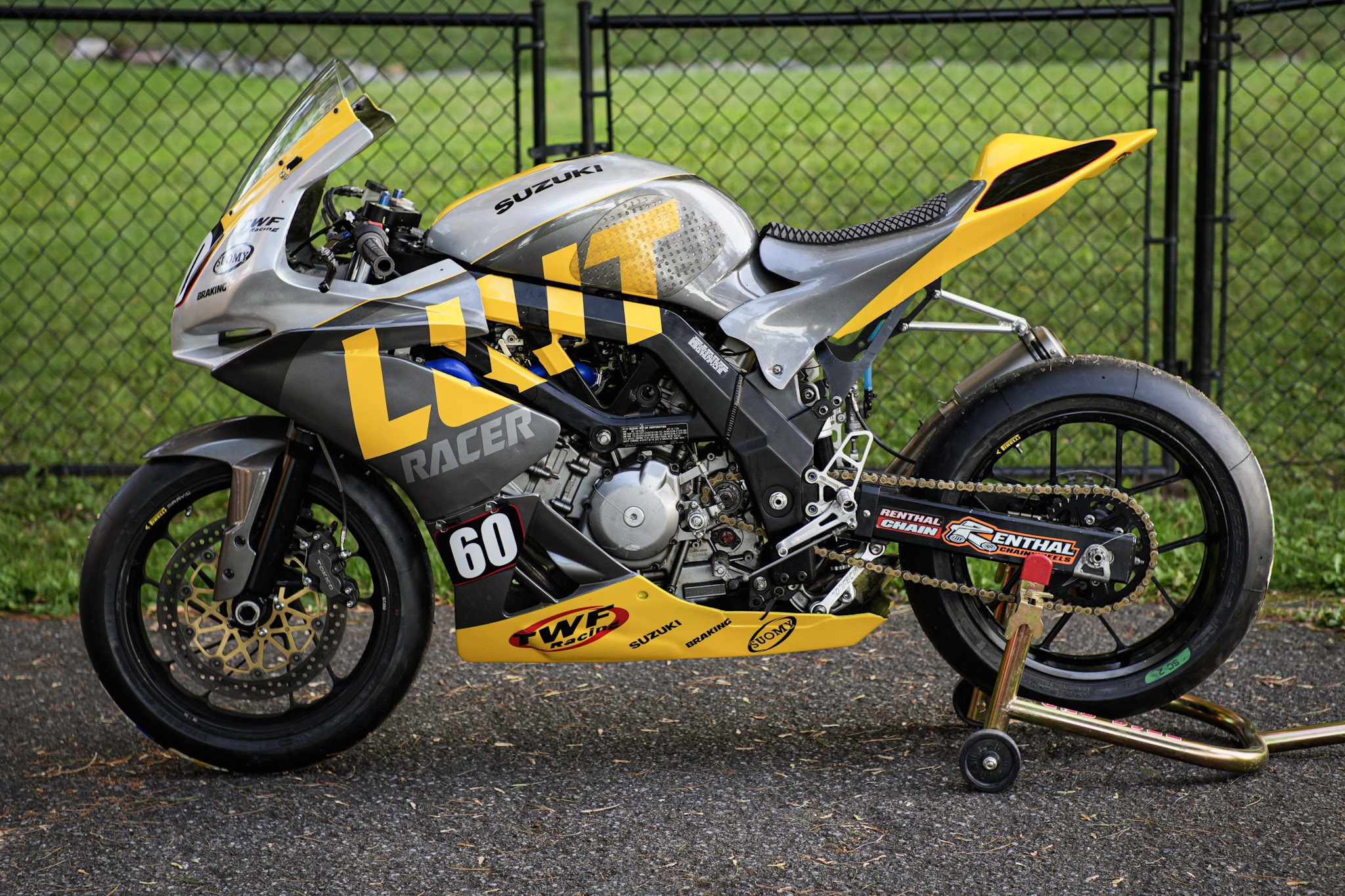
There are still a few things left to finish on this machine—machining stronger subframe mounts, applying Cerakote to the triple clamps, case covers, and front caliper, and sourcing a matching Carrozzeria front rim. For now, though, the focus is simply on getting it through a race. Why did this project take 7 years? Priorities mainly. With Twins Cup and a physical injury, this bike really took a back seat. Parts were robbed off it in 2021 and 2022 but at last it is alive.
Thank you to Jon Forman for extra information and photos.
This post has already been read 1801 times!